ISG Vertical Pipeline Centrifugal Pump overheating motor troubleshooting
Overheating on the motor of an ISG vertical pipeline centrifugal pump is not a trivial temperature fluctuation that can be ignored until it resolves on its own. Sustained high temperatures inside the motor will degrade winding insulation, accelerate grease breakdown in bearings, and eventually lead to unexpected shutdowns or permanent motor damage. Many site teams only check surface temperature readings and fail to trace the full chain of root causes that may originate from the pump side, electrical system, or surrounding operating environment.
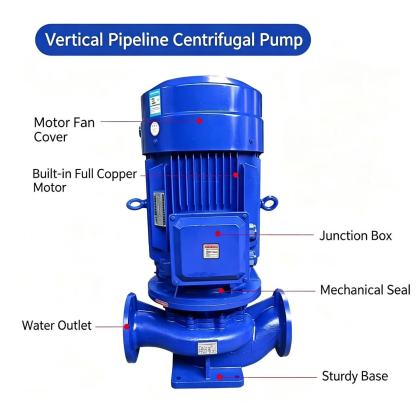
Electrical System and Power Supply Inspection
Start troubleshooting by verifying the full electrical loop that feeds the motor, since unstable power conditions are one of the most common hidden triggers for consistent overheating. Measure line-to-line voltage across all three phases while the motor is running under full load, and confirm no phase shows a voltage deviation larger than the allowed tolerance, because even a small unbalance will generate excessive circulating currents inside the stator that turn directly into extra heat. Check the actual operating current on each phase against the motor nameplate value, and make sure no single phase is carrying current far above rated limits due to winding degradation, loose terminal connections, or damaged power cables. Inspect contactors, circuit breakers, and all junction points along the power path for signs of arcing, discoloration, or loose terminals that create extra resistance and local heat buildup. For systems running on variable speed drives, confirm the parameter settings for carrier frequency, acceleration ramp, and voltage boost are correctly matched to the motor, as improper tuning can introduce high-frequency harmonic losses that push winding temperatures far above normal operating limits.
Mechanical Load and Transmission Side Diagnosis
Many motor overheating faults do not originate inside the motor itself, but come from excessive mechanical load transmitted from the pump side. Check the current reading across the full operating flow range, and confirm the pump is not running far outside its design curve, such as operating at extremely high flow with a fully open discharge valve that makes the motor draw far more power than its rated capacity. Inspect the coupling connection between motor and pump to rule out excessive axial preload, binding, or severe misalignment that creates extra radial and axial forces on the motor shaft, adding unnecessary mechanical friction and heat. Turn the entire rotor assembly by hand during a full lockout-tagout procedure, and feel for any stiff spots, rubbing resistance, or uneven rotation that points to worn pump bearings, a damaged mechanical seal, or internal component contact that forces the motor to work harder than intended. Even a small amount of residual misalignment that does not trigger obvious vibration can create continuous extra load that slowly raises motor temperature hour after hour during long-term operation.
Cooling and Ambient Environment Root Cause Check
Even when electrical and mechanical conditions are fully within specification, poor cooling conditions can still push motor temperature to unsafe levels. Clean all dust, lint, and debris accumulated on the motor cooling fins and fan cover, since a thin layer of buildup can act as an insulating blanket that traps heat and prevents normal heat dissipation. Inspect the motor cooling fan to confirm all blades are intact and rotating in the correct direction, and make sure the fan shroud is properly seated without gaps that allow cooling air to recirculate instead of flowing across the fin surface. Check the surrounding ventilation space around the motor, and confirm no nearby equipment, wall, or stored material blocks the air inlet and outlet paths that the motor relies on for natural or forced cooling. For installation locations with consistently high ambient temperature, poor air exchange, or direct exposure to solar radiation, even a perfectly healthy motor will run hotter than designed, and small adjustments like adding local forced ventilation or shading can bring operating temperature back within the safe range without modifying any internal components.
Recommend
-

-

QQ Zone
-

Sina Weibo
-

Renren.com
-

Douban