ISG Vertical Pipeline Centrifugal Pump vs horizontal centrifugal pump difference
Selecting between an ISG vertical pipeline centrifugal pump and a horizontal centrifugal pump directly affects installation layout, long-term maintenance routines, and overall system compatibility for industrial fluid transfer applications. The core distinction does not lie in basic centrifugal working principles, but in how shaft orientation reshapes every practical aspect of field deployment and daily operation. Engineers often evaluate these differences based on real site constraints rather than generic performance curves alone.
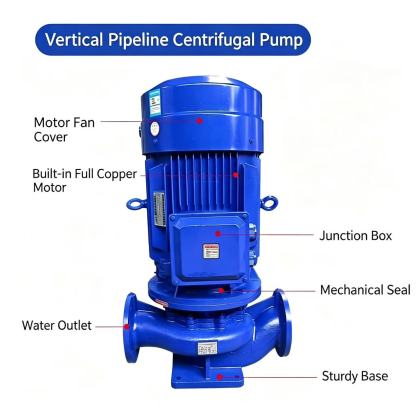
Footprint and Installation Geometry
The vertical shaft arrangement allows the unit to be mounted directly in line with the pipeline, eliminating the need for a large separate base frame that occupies extensive floor space. This configuration fits naturally in compact plant layouts, narrow pipe galleries, or locations where available floor area is strictly limited. A horizontal centrifugal pump, by contrast, requires a dedicated foundation that supports both the pump and motor on the same horizontal plane, with enough clearance around the coupling for alignment work. The horizontal layout demands more careful consideration of floor loading and spatial planning, especially when multiple parallel pumping units are arranged in a row.
Shaft Alignment and Assembly Complexity
Vertical inline design typically places the pump and motor on a shared coaxial connection that removes the need for complex field shaft alignment after installation. As long as the pipeline flanges are properly supported and not imposing excessive strain on the pump casing, the rotating assembly maintains consistent concentricity through normal operating conditions. Horizontal units, however, rely on a separate coupling between pump and motor shafts that must be carefully aligned both radially and axially during initial setup and after every major overhaul. Even minor misalignment introduced by foundation settlement or piping thermal expansion can generate elevated vibration, accelerated bearing wear, and premature seal failure that would be far less likely in a typical vertical inline arrangement.
Suction Performance and NPSH Behavior
A vertical pipeline centrifugal pump often places the impeller closer to the suction source or at an elevation that creates a more favorable net positive suction head environment compared to many horizontal configurations. This layout reduces the risk of cavitation in systems where available NPSH is marginal, especially when handling warm fluids or operating near the upper end of the performance curve. Horizontal pumps, with their suction nozzle oriented horizontally, require careful attention to suction line layout to avoid air pockets, uneven flow distribution, or unnecessary friction losses that degrade suction conditions. In applications where the pump must be mounted above a sump or fed from a long suction run, these differences in suction geometry can become one of the most critical decision points.
Maintenance Access and Service Logistics
Working on a horizontal centrifugal pump usually provides full side access to the entire rotating assembly once surrounding pipework and safety guards are removed. Technicians can perform seal replacements, bearing inspections, and impeller checks without disturbing the main piping connections in many back pullout designs. Vertical inline pumps, by comparison, often require partial disassembly of upper motor components or careful lifting of the rotating element while the pump casing remains attached to the pipeline. This difference changes the typical duration of maintenance interventions, the type of lifting equipment needed on site, and the amount of clearance required above the pump for safe service access.
System Integration and Operating Flexibility
Horizontal centrifugal pumps have long been preferred in large-flow, high-head installations where robust base frame rigidity and easy access for heavy component servicing are primary priorities. They are commonly specified in scenarios where frequent hydraulic trimming, impeller swapping, or performance testing is expected over the asset lifecycle. Vertical inline pipeline pumps excel in retrofit projects, confined utility spaces, and closed-loop circulation systems where direct inline mounting minimizes piping complexity and avoids unnecessary elbow fittings that add friction loss. Neither configuration universally outperforms the other; the final selection depends on balancing site layout constraints, suction conditions, maintenance resources, and the specific long-term operational requirements of the fluid system.
Recommend
-

-

QQ Zone
-

Sina Weibo
-

Renren.com
-

Douban