ISG Vertical Pipeline Centrifugal Pump suitable for clean water transfer
For engineers designing municipal water distribution networks, commercial building HVAC systems, agricultural irrigation lines, and general industrial fluid loops, selecting the right equipment for clean water transfer directly impacts long-term system reliability, quiet operation, and low maintenance demand. The vertical inline centrifugal configuration has become one of the most widely adopted choices for these applications, and its suitability for clean water service is rooted in decades of field-proven design principles that align closely with the typical performance requirements of clear, low-solids water transfer. This guidance is drawn from real-world installation experience, hydraulic design best practices, and decades of operational data from facilities running thousands of these units in clean water service, to help you understand exactly how this pump type performs in these specific operating contexts.
Hydraulic design optimized for stable clean water flow characteristics
Clean water transfer demands smooth, predictable performance across a wide range of flow rates, and the hydraulic profile of this pump type is developed specifically to match the low viscosity, low abrasion properties of clear water. The single-stage centrifugal impeller and volute geometry are tuned to deliver high efficiency across the most common flow and head ranges seen in water distribution, pressurization, and circulation systems. Unlike positive displacement pumps that create pulsating flow, this centrifugal design delivers steady, non-pulsating discharge that avoids water hammer stress on piping networks, making it well suited for high-rise building water supply, garden sprinkler systems, and long-distance water conveyance lines. The low NPSH requirements for clean water service also reduce the risk of cavitation, even in installations where suction pressure is not exceptionally high, as long as basic system design best practices are followed.
Compact inline layout fits clean water system constraints
Most clean water transfer projects face real-world space limitations, whether inside a tight building mechanical room, along an existing above-ground pipeline, or in a small outdoor pumping station. The vertical inline configuration, with suction and discharge ports on the same centerline, allows the pump to be mounted directly in line with the existing piping, eliminating the need for large baseplates and complex alignment work that horizontal pump designs often require. This layout drastically reduces the total footprint required for the installation, making it far easier to integrate into retrofit projects where space was never allocated for a dedicated large pump room. For clean water systems that prioritize simple piping arrangements, this design also reduces the number of elbows and fittings needed around the pump, which in turn cuts down unnecessary friction losses and improves overall system hydraulic efficiency.
Material compatibility for standard clean water operating conditions
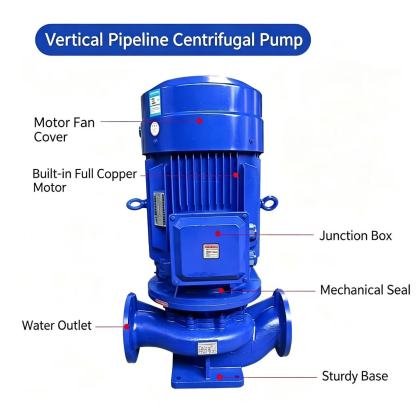
For typical clean water applications with temperature below 80 degrees Celsius, no corrosive additives, and suspended solid content kept below 0.1 percent, the standard material combinations used in these pumps deliver long service life with minimal degradation. Cast iron pump casings and impellers provide excellent durability for neutral pH municipal water, well water, and treated industrial process water, resisting general oxidation and mechanical wear under normal operating pressures. Mechanical seal faces made from wear-resistant hard materials perform reliably in clean water without abrasive particles, maintaining consistent leak-free performance across thousands of running hours. For clean water systems that operate at elevated temperatures, such as hot water circulation loops in heating and cooling systems, modified material configurations are available that extend the temperature rating well beyond the standard baseline, without requiring full chemical-resistant construction.
Simplified maintenance that matches clean water system operational patterns
Facilities running clean water transfer systems rarely have large dedicated maintenance teams on site, so ease of inspection and service becomes a major practical advantage. The rotor assembly, made up of the impeller, shaft, bearings, and seal, can be removed for inspection or replacement without disturbing the surrounding piping connections. This means routine seal changes, bearing replacement, and impeller wear checks can be completed quickly, drastically reducing system downtime during planned maintenance windows. For clean water systems that run continuously for months at a time, this design also allows operators to perform regular condition checks on bearing temperature, vibration, and seal leakage without full system disassembly. This level of serviceability fits perfectly with the operational rhythm of most clean water transfer applications, where long periods of stable operation are interrupted only by short, scheduled maintenance events.
Recommend
-

-

QQ Zone
-

Sina Weibo
-

Renren.com
-

Douban