ISG Vertical Pipeline Centrifugal Pump modification for hot water medium
When a standard vertical inline centrifugal pump originally rated for ambient clean water service is repurposed or adapted to handle hot water above 80 degrees Celsius, many hidden design limitations that never cause issues at room temperature can quickly lead to premature seal failure, thermal distortion, and unexpected downtime. These modification practices are built on decades of field retrofit experience, boiler circulation system commissioning records, and high-temperature fluid handling maintenance data, to help engineers implement safe, reliable upgrades that extend pump service life and prevent avoidable failures in hot water service.
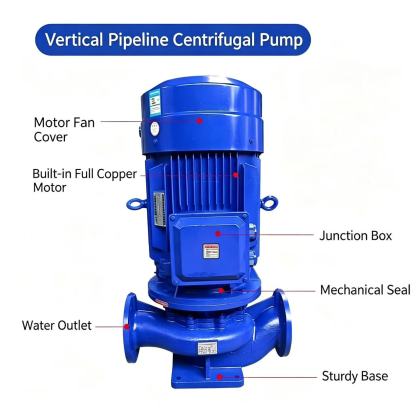
Upgrade seal system for elevated temperature and thermal cycling
The single most common point of failure in unmodified pumps used for hot water is the mechanical seal, which was originally designed for stable, cool operating conditions. When water temperature rises significantly, the seal’s elastomer components lose their physical properties, face lubrication conditions change, and rapid temperature swings during startup and shutdown create thermal shock that causes cracking on hard seal faces. The first critical modification is to replace standard ambient-temperature seal components with materials rated for continuous operation at the maximum expected hot water temperature, with extra safety margin built in for occasional temperature spikes. You also need to add a small flush line or cooling reservoir around the seal chamber, to maintain a stable, controlled temperature at the seal faces and prevent vaporization of the fluid right at the sealing interface. Without this modification, even a pump that appears to run fine at steady state will develop frequent, unpredictable leakage after repeated thermal cycles.
Adjust structural components to accommodate thermal expansion
As pump casing, shaft, and internal components heat up to hot water operating temperature, each material expands at a different rate, creating small but critical shifts in alignment and internal running clearances. Standard cold water pump designs do not account for these thermal growth patterns, which can cause the rotating shaft to rub against stationary seal faces, wear rings, or casing walls once the unit reaches full operating temperature. The modification process must include verifying and adjusting impeller to casing clearances to the larger values required at high temperature, so that no contact occurs even after all components have fully expanded. You also need to check shaft concentricity at operating temperature, confirm that the motor mounting flange can tolerate differential thermal growth without pulling the shaft out of alignment, and add flexible pipe connections on suction and discharge sides to absorb any movement transmitted from hot system piping. These small dimensional adjustments prevent binding, abnormal vibration, and unexpected component contact that would quickly destroy a pump running at high temperature.
Revise bearing and lubrication configuration for sustained high temperature
Hot water radiates heat through the pump casing and along the shaft, raising operating temperature in the bearing housing far above the levels seen in ambient water service. Standard grease or oil lubrication selected for room temperature operation can thin out, lose its load-bearing properties, or degrade much faster than intended, leading to premature bearing wear and unexpected failure. The modification work includes selecting high-temperature rated lubricant formulated to maintain consistent viscosity at elevated housing temperatures, and adding external cooling fins or a small auxiliary cooling loop around the bearing bracket if the expected operating temperature exceeds the original design limit. You also need to adjust bearing clearance values to account for thermal expansion of the shaft inner race, so that the bearing does not become preloaded and overheat once it reaches full operating temperature. Adding temperature sensors on the bearing housing to track long-term trend data also helps operators spot abnormal heat buildup long before it leads to catastrophic failure.
Update suction and startup procedures for hot water conditions
Even with all mechanical modifications completed, a pump adapted for hot water service will still experience problems if operators follow the same startup and suction rules used for cold water. Hot water has much higher vapor pressure, so the available net positive suction head at the installation site must be recalculated specifically for the maximum operating temperature, not based on standard cold water values. The suction line must be kept fully pressurized at all times, to prevent the hot water from flashing into vapor inside the pump volute during standby or low flow conditions. Operators also need to implement a slow, gradual warm-up procedure before bringing the pump to full speed, allowing all components to heat up evenly and eliminating any uneven thermal expansion that could create temporary shaft misalignment. These procedural adjustments are just as critical as mechanical upgrades, and they ensure the modified pump delivers stable, long-term performance in continuous hot water circulation service.
Recommend
-

-

QQ Zone
-

Sina Weibo
-

Renren.com
-

Douban